
News & Media / What’s an SEO Audit for Professional Services
What’s an SEO Audit for Professional Services
What’s an SEO Audit for Professional ServicesPublished
Feb 09, 2026
For senior marketing leaders in professional services, SEO is rarely a question of belief. The challenge is not whether search matters, but whether it can be governed, prioritized, and tied credibly to business development outcomes.
Most firms have experimented with SEO at some point. Content was created. Technical fixes were made. Reports were delivered. And still, months later, uncertainty remains. Traffic may have grown modestly, but you’re still asking the same questions: Is this actually helping us win the right work? Are we investing in the right areas? And how does this support BD?
This is where the SEO audit earns its place as a strategic instrument not as a technical exercise. When designed properly, it allows senior marketing leaders to move SEO out of the realm of opinion and into a governed, defensible growth conversation.
Why SEO Often Feels Unmanageable in Professional Services
Why SEO Often Feels Unmanageable in Professional ServicesProfessional service firms operate under constraints that most SEO playbooks ignore. Long sales cycles, relationship-led growth, risk sensitivity, regulatory oversight, and limited internal capacity all shape how marketing decisions are made.
SEO struggles when it is introduced as a list of tactics rather than a system. Without a clear diagnostic, teams are left reacting… publishing content because “we should,” optimizing pages without clarity on intent, or chasing rankings that have little influence on real demand.
You likely feel this tension acutely as you’re responsible not only for performance, but also for stewardship: protecting brand credibility, aligning marketing with BD, and making disciplined investment decisions.
SEO must support those responsibilities, not complicate them.
A Strategic SEO Audit is How Alignment Begins
A Strategic SEO Audit is How Alignment BeginsAt its core, an SEO audit answers a different set of questions than most SEO programs are designed to address.
It asks whether the firm’s digital presence is structured in a way that search engines, and, by extension, prospective clients, can clearly understand who the firm serves, what it offers, and where it has authority. It reveals where visibility is being quietly suppressed, where opportunity already exists but is not being captured, and where effort is being misallocated.
It allows marketing leaders to say, with confidence, this is what matters now, this can wait, and this is not worth pursuing yet. In professional services, that clarity is often more valuable than the tactics themselves.
Choosing the Right Audit Depth
Choosing the Right Audit DepthOne of the most common missteps we see is firms defaulting to a full, exhaustive SEO audit before the organization is ready to absorb or act on it. Depth does not equal value. Relevance does.
For senior marketing leaders, the decision between a light and a comprehensive SEO audit should be guided by governance and readiness. Answering these three questions tend to clarify the right approach:
- Is the goal to validate assumptions and de-risk decisions, or to build a long-term organic growth engine?
- Is SEO expected to inform business development strategy, or simply improve baseline visibility?
- Does our team have the capacity to act on multi-quarter recommendations?
The answers typically point to one of two paths:

A light SEO audit gives senior leaders enough evidence to make informed decisions without overloading teams. It is particularly effective when marketing leaders need to justify investment, align stakeholders, or prepare for structural change.
A comprehensive SEO audit, by contrast, is most valuable when SEO is expected to materially influence pipeline quality, inbound demand, and the firm’s long-term market position.
From SEO Insight to Business Development Leverage
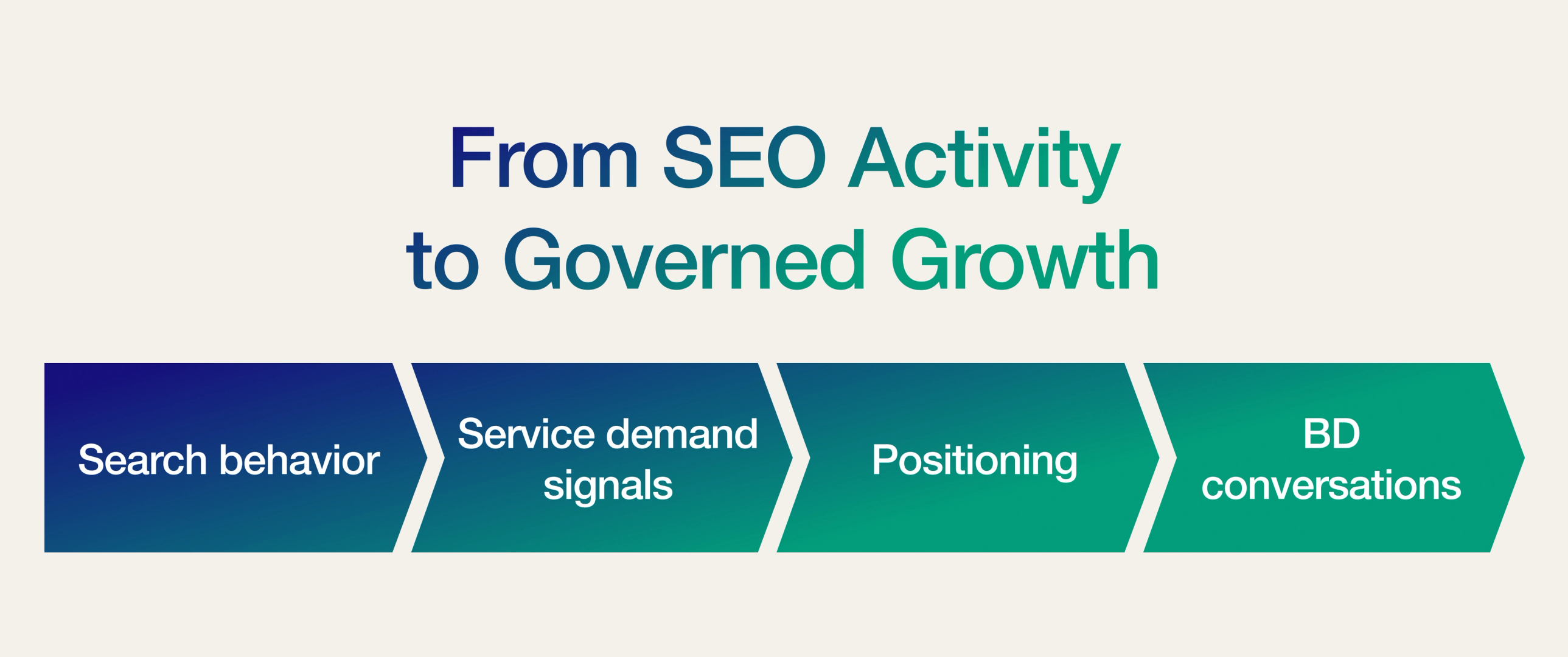
From SEO Insight to Business Development LeverageWhere SEO becomes truly valuable for professional services is at the intersection of insight and business development.
Search data reveals how prospective clients articulate their problems, how demand clusters around specific services, and which firms are shaping the conversation before a sales discussion ever begins. When these insights are surfaced through an audit, they inform far more than content strategy.
They influence how services are framed, which practice areas receive marketing focus, how thought leadership is structured, and how BD teams speak to client needs. In this way, SEO shifts from a marketing channel to a form of market intelligence that supports strategic growth decisions.
Implementation Without Disruption
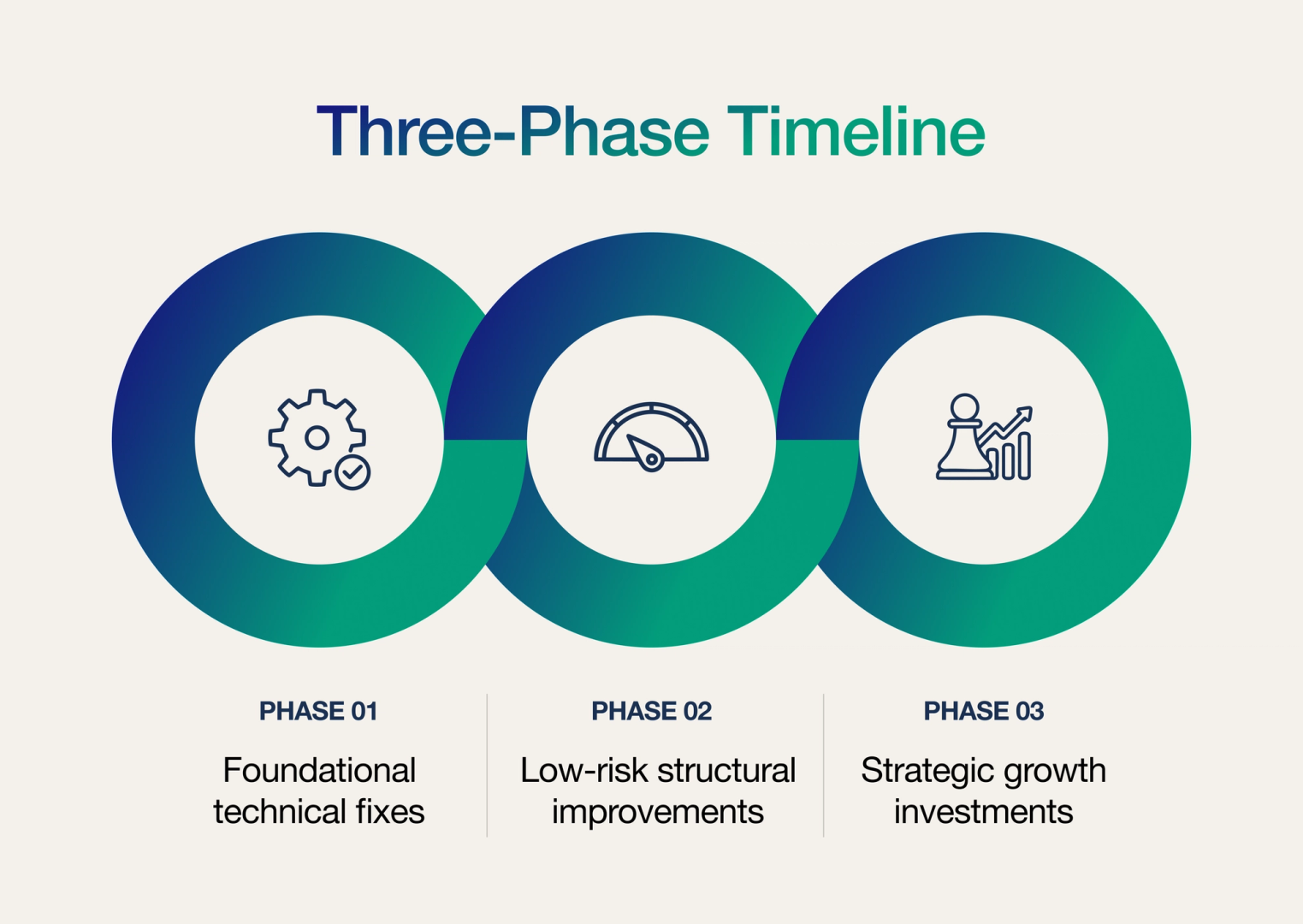
Implementation Without DisruptionEven when the strategic case is clear, implementation remains a legitimate concern. And, effective audits account for this reality. Recommendations should be phased, separating foundational technical issues from low-risk structural improvements and longer-term strategic investments.
This allows marketing leaders to sequence change deliberately, protecting what already works while strengthening what does not.
You Need Better SEO Metrics, Not More of Them.
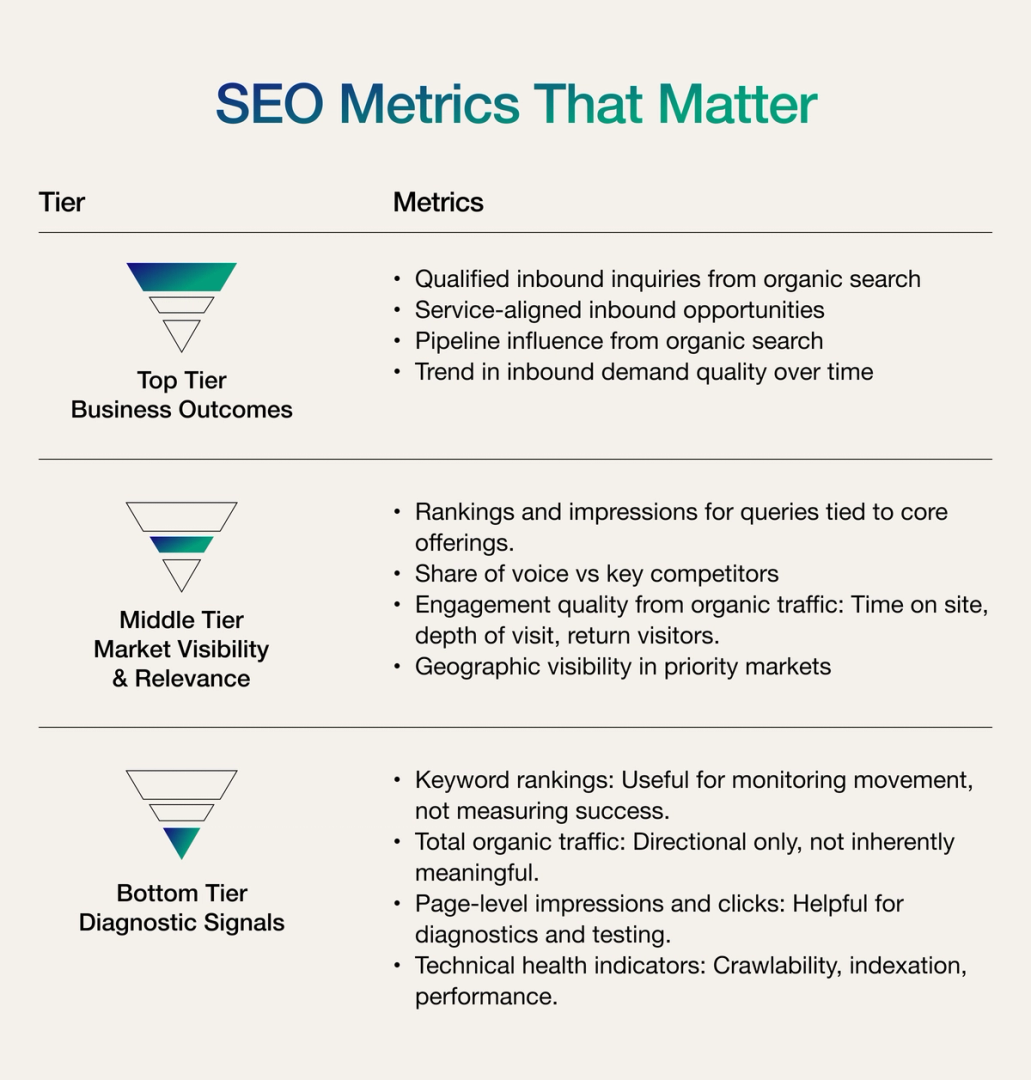
You Need Better SEO Metrics, Not More of Them.Early measurement should prioritize confidence over precision. The objective is to understand whether the firm is becoming more visible, more relevant, and more discoverable in the moments that matter.
While rankings remain a useful signal, they don’t tell the full story. More meaningful indicators include visibility for high-intent service queries, engagement quality, qualified inbound inquiries, and comparative share of voice.
SEO as a Governance Tool
When framed correctly, an SEO audit is not about optimization. It is about governance.
It gives senior marketing leaders a clear view of how the firm is represented in search, where growth opportunities exist, and how digital presence supports broader business development objectives. It replaces guesswork with insight and allows SEO to function as a disciplined, strategic system rather than an ongoing source of uncertainty.
For professional service firms navigating complex growth environments, that clarity is often the most valuable outcome an SEO audit can deliver.
SEO Should Reduce Uncertainty
SEO Should Reduce UncertaintyIf SEO feels confusing or overwhelming right now, that’s usually a signal that it hasn’t been framed the right way yet.
Our team doesn’t treat SEO as a checklist or a one-size-fits-all service and our audits are designed to create clarity, and will help your team understand:
- Where real search demand already exists
- What’s holding your website back today
- What to prioritize now, later, or not at all
Our goal is to give you a realistic path forward that fits your business and internal capacity.